

Why Applying Online Is Not the Same as Looking for Work
Filling out applications can feel like progress, but it is not the same as actively searching for a job.
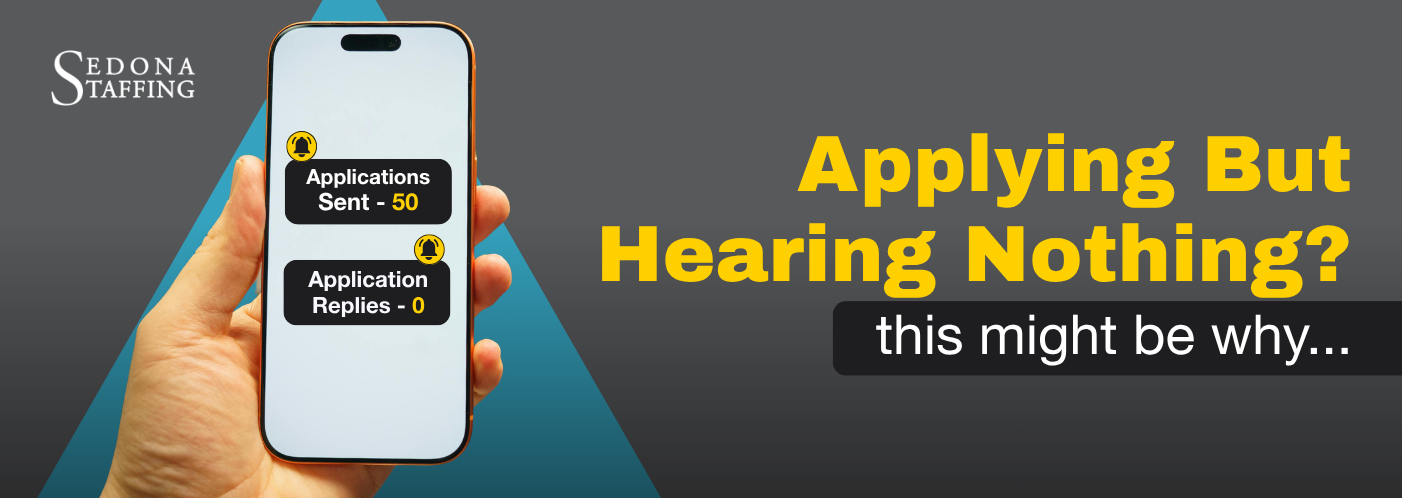
If you have been applying to jobs for weeks and not hearing back, you are not alone. The problem is not effort. The problem is that the way most people apply for work has very little in common with how most people actually get hired.
Why Applying on Indeed Feels Like the Productive Choice
Online job boards make the search feel manageable. You can sit down on a Sunday night, fill out twenty applications in two hours, and walk away feeling like you put in real work. The interface rewards volume. Every submission is a small completion, and the platform itself encourages you to keep going.
That feels productive because it is measurable. You can count what you did. The trouble is that the thing being measured is not what gets people hired. The number of applications you submit and the number of interviews you get are two different things, and most people do not realize how loosely connected they are until they have been searching for a while.
What Application-Only Searching Quietly Costs You
Putting all of your effort into online applications has costs that do not show up until you are weeks in:
- Most online applications are read by software first and a human second, which means small wording mismatches can knock a strong candidate out before anyone sees the resume.
- The same job posting often attracts hundreds of applicants, so even a perfect application is competing in a stack that recruiters can only skim.
- You lose direct feedback. When an application disappears, you do not know whether you were close, missing one thing, or never considered at all.
- You miss the roles that never get posted publicly. A real percentage of jobs get filled through recruiters and referrals before they ever appear on a job board.
- You confuse activity with momentum, which makes a long search feel longer and more discouraging than it needs to be.
None of this means online applications are useless. It means treating them as the entire search is what creates the trap. The goal is to apply less and connect more.
Why the First Few Weeks of a Search Set the Tone
The first two or three weeks of a job search are the most important, and most people use them in the way that pays off the least. They send applications, refresh their inbox, and wait. By week three, the silence starts to feel personal, and confidence drops at exactly the moment when energy matters most.
Candidates who change tactics early tend to land faster. The shift is simple but specific. Instead of treating every hour as another twenty applications, they spend half of that time talking to people who actually decide who gets hired. That includes recruiters, hiring managers in their network, and former coworkers who know what is open.
The Confidence Cost That Hurts Your Next Interview
There is a less obvious cost to a long online-only search, and it shows up in the interview when you finally land one. Weeks of silence wear on people. Candidates who have been ignored for a month walk into interviews carrying that experience with them, and it leaks out in body language, tone, and how they answer questions about their search.
Hiring managers can feel it. They are not looking for desperation. They are looking for someone who is engaged, prepared, and clearly choosing this opportunity rather than just hoping any opportunity says yes. The longer the application-only search runs, the harder that becomes to project, even when the candidate is genuinely strong.
Why This Matters More in a Local Market
In larger metropolitan areas, application volume can occasionally produce results just because there are so many openings. In a local market, the math is different. The number of employers is finite, the recruiters all know each other, and the same names move between roles more often than people realize.
That means a candidate in a local market has a real advantage if they are willing to pick up the phone or walk in. The path from a conversation to an interview is shorter here than almost anywhere else, but it requires actually starting the conversation.
How Sedona Staffing Helps Job Seekers Get Past the Application Wall
Working with a Sedona recruiter changes what your search looks like. Instead of submitting applications into a queue, you have a conversation with someone who knows what employers in your area are actually hiring for, including roles that have not been posted yet. The recruiter is on your side, your resume gets seen by a real person, and you find out where you stand instead of waiting in silence. The search stops being about volume and starts being about fit.
Frequently Asked Questions
Q. Is applying on Indeed and other job boards a waste of time?
A. No, but it should not be the whole search. Online applications work best when paired with real conversations, not used as a substitute for them.
Q. How many applications should I be submitting per week?
A. Quality matters more than quantity. Five well-targeted applications paired with a few real conversations will outperform fifty rushed applications almost every time.
Q. Why am I not hearing back even when I match the job description?
A. Most often it is one of three things: applicant tracking software filtered the resume, the role had too many applicants to review thoroughly, or the position was already close to filled by the time it was posted. None of those are about you personally.
Q. How is working with a recruiter different from applying on my own?
A. A recruiter advocates for your application, gives you direct feedback, and connects you to roles that never reach a job board. You stop being one of hundreds and start being one of a few.
Q. Does it cost anything to work with a staffing agency like Sedona?
A. No. Sedona is paid by the employer, not by the candidate. The recruiter is working for free on your behalf, which is one of the most underused resources in any job search.
Final Thoughts
If you have been applying online for weeks and the silence is wearing on you, the problem is not your effort. It is the strategy. Applications are part of a search, but they are not the whole search.
The candidates who land fastest are not always the most qualified. They are the ones who shift from typing into a search bar to talking to people who already know where the openings are. That shift is the one that changes the outcome.
This article is for informational purposes only and job placement or employment is not guaranteed. This article was written by our team of staffing experts. We leverage advanced AI tools to assist with research and composition, and every piece is reviewed and edited by our team.