

Why Great Candidates Keep Getting Missed by Employers Who Know Hiring Is Hard
The hardest hires are not failing because of effort. They are failing because of how the search was calibrated.
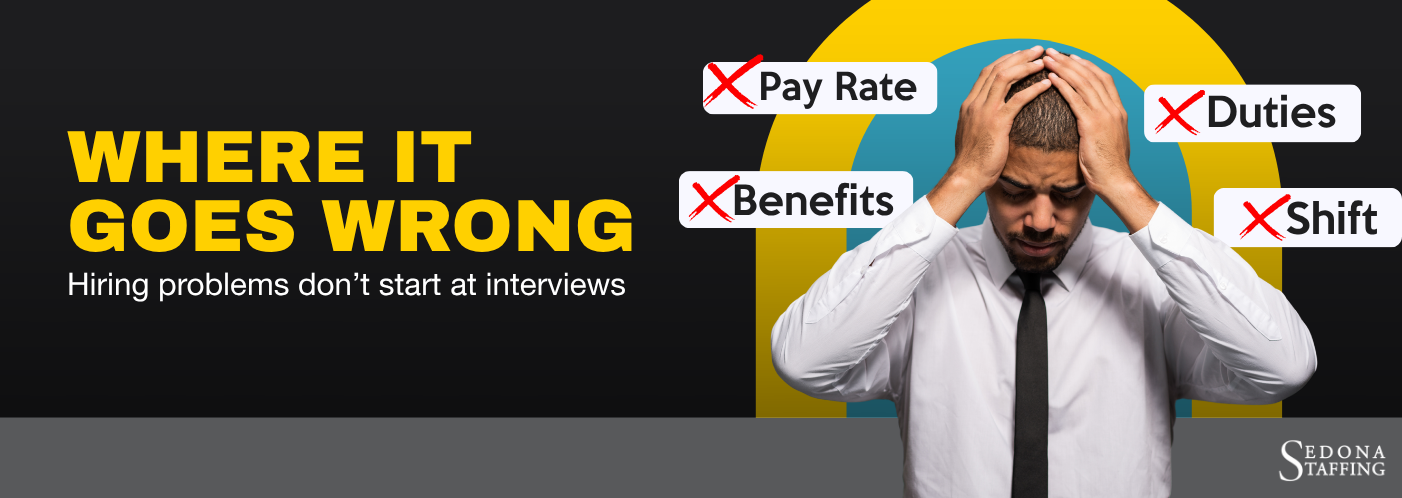
Most employers right now know exactly how hard it is to find good people. They are not being lazy about hiring. They are being careful. But something keeps happening anyway. Strong candidates walk past the role, and the seat stays open longer than it should. The cause is rarely what employers think it is.
Why the Picture of the Perfect Candidate Feels Like the Safe Choice
When an employer has been burned by a bad hire, the instinct is to tighten the criteria. Add more must-haves. Narrow the industry experience. Require the exact tool, the exact certification, the exact background. It feels like responsibility. It feels like learning from what went wrong. But what usually gets tightened are the wrong things. The filters end up catching on surface-level markers while the deeper qualities that actually predict success quietly slip through. Employers are doing the hard work of hiring carefully. The issue is that the picture being built of the right candidate is sometimes built against last year's market, not this one.
The Real Costs Employers Do Not See Right Away
When the picture of the right candidate is slightly off, the costs compound in ways that do not show up on any single report.
- Strong candidates who would have grown into the role get filtered out on a missing keyword.
- Time-to-fill stretches as recruiters search for a candidate profile that may not exist in the local market.
- Hiring managers start to feel like nothing is working, when in reality the search itself was calibrated too narrowly.
- Competing employers who adjusted their criteria earlier end up with the candidates who would have been a great fit.
- Internal teams carry the weight of the open seat for weeks or months longer than necessary.
None of these show up as a hiring mistake. They show up as a hiring frustration. That frustration is usually a signal worth listening to, because it often means the criteria need a second look.
Why This Gets Harder the Longer It Goes Unexamined
Candidate markets shift quickly. The kind of profile that was abundant two years ago may be scarce today, and the kind of candidate who was considered a stretch hire a year ago may now be the strongest available option. Employers who revisit their criteria regularly stay aligned with what the market is actually offering. Employers who hold to criteria built during an earlier period find themselves interviewing the same narrow pool over and over, often the same candidates who have already passed through competitors. The longer the criteria go unchallenged, the wider the gap becomes between what the employer is searching for and what is actually available to hire. This is not a fault. It is a calibration issue that every employer faces at some point.
The Secondary Impact Most Employers Miss
There is another cost that does not get talked about. When an employer spends weeks on a search that is not producing candidates, the team working on that search loses confidence. Recruiters begin to assume the market is empty. Hiring managers begin to assume no one is out there. Leadership begins to question whether the role is even fillable. None of that is true. Usually the candidates are there. The search parameters are just looking past them. Employers who work with a partner willing to push back on the criteria, respectfully and with real market evidence, consistently find that the candidate pool was wider than anyone inside the company realized.
Why Local Market Realities Matter More Than National Trends
Every market has its own candidate supply, its own pay expectations, its own industry mix. What is true in one city is not always true in another. National hiring reports can describe a trend that does not match what is actually happening in a specific zip code. When employers calibrate criteria based on national data or on what they remember from another market, they often end up searching for a candidate profile that does not exist locally at the pay and conditions being offered. The inverse is also true. Strong candidates that would have been considered out of reach in a larger metro are often available and interested in roles in smaller or mid-sized markets. Understanding what a local market actually contains is the difference between a productive search and a frustrating one.
How Sedona Staffing Helps Employers Navigate This Together
At Sedona Staffing, our recruiters spend a meaningful part of their day on conversations most people never see. That includes asking employers gentle but direct questions about which criteria are truly essential, which are preferences that could flex, and which are assumptions carried forward from earlier searches. We are not trying to talk anyone into lowering their standards. We are trying to help employers see the full range of what is available so they can make the call with clear information. The best hires almost always come from a calibrated search, not a perfect one. Our job is to help employers get there faster, without judgment about how the search started out.
Questions Employers Are Asking
Q. Does this mean my standards are wrong?
A. Not at all. It usually means your standards are right but the picture of who meets them could be wider than it currently is. A strong partner helps you see the candidates you might have otherwise filtered out without realizing it.
Q. What is the actual cost of keeping a narrow search open longer?
A. Beyond the open seat itself, the cost includes the team stretched thin covering the gap, the candidates lost to faster-moving competitors, and the loss of confidence that builds when weeks go by without results. None of that shows up on one line item, but together it is usually significant.
Q. How do I know if my criteria are calibrated to the current market?
A. The clearest signal is when a search has been open for a while and the same small pool keeps recycling through. That usually means the criteria are working against market reality. A good staffing partner can show you what else is available and help you adjust from there.
Q. Does flexing criteria mean compromising quality?
A. No. It means separating the requirements that truly predict success from the ones that simply feel safer. Many of the best long-term hires come from candidates who would have been filtered out by overly rigid criteria but who bring the traits that actually matter most in the role.
Q. What is Sedona Staffing's role in all of this?
A. We sit close to both sides of the market every day, so we see what is actually available in ways a hiring team on its own often cannot. Our recruiters help employers calibrate their searches with real candidate evidence, so the right hire becomes a matter of when, not if.
Final Thoughts
Hiring is hard right now, and employers who are being thoughtful about it deserve a partner who is just as thoughtful. The point of this is not that employers are getting it wrong. The point is that calibrating a search to current market reality is difficult for anyone to do alone, and it is not supposed to be done alone.
A staffing partner earns their role by helping employers see what they cannot easily see from inside the company. When that conversation happens early, the right candidate almost always shows up faster than anyone expected.
This article is for informational purposes only and job placement or employment is not guaranteed. This article was written by our team of staffing experts. We leverage advanced AI tools to assist with research and composition, and every piece is reviewed and edited by our team.